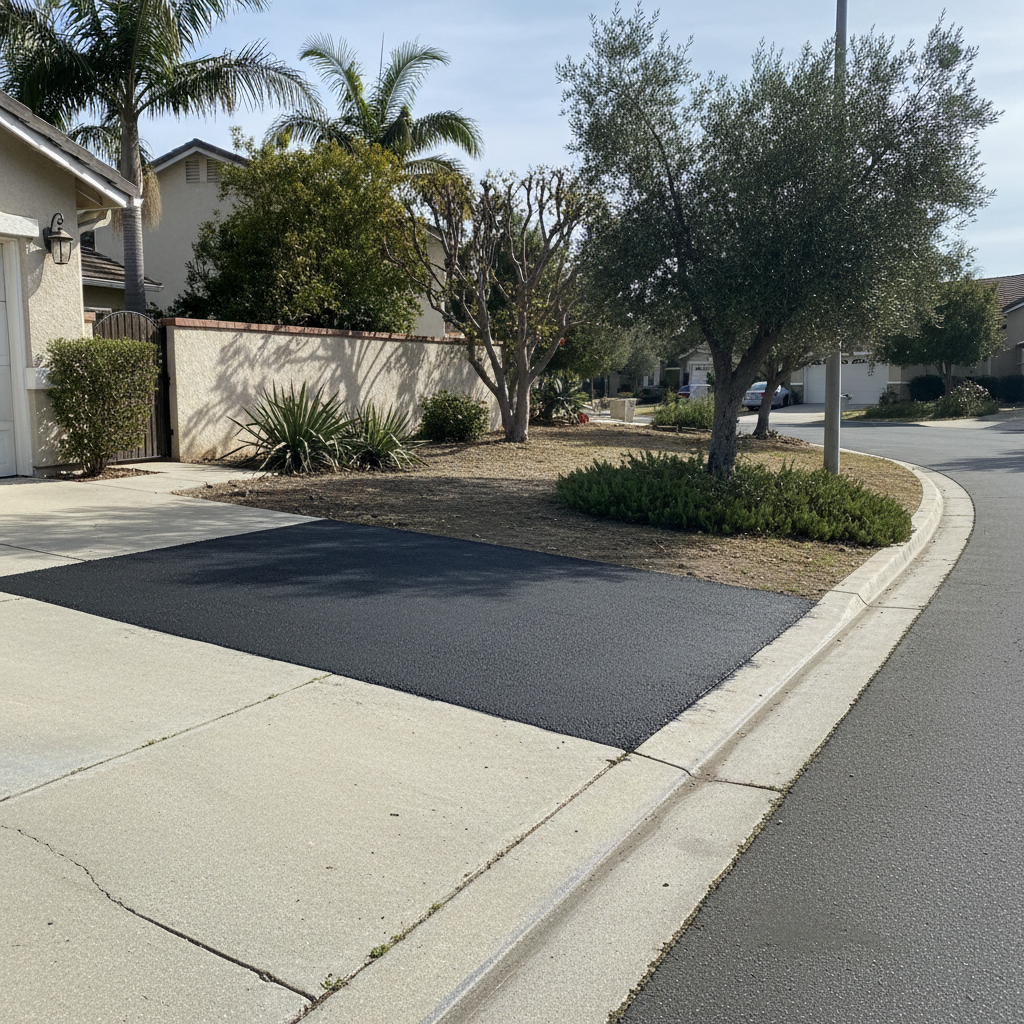
You've got cracks, potholes, or just some rough spots on your asphalt driveway or private road. It happens. You know you need to get it patched, but what you might not know is how easy it is to make a few common blunders that'll cost you more in the long run. I've seen it countless times here in Brea, and I want to help you avoid the headaches.
Mistake #1: Thinking All Patches Are Created Equal
This is a big one. A lot of folks think a patch is a patch. They see a low bid and jump on it, not realizing there are different methods and materials. You've got cold patch, hot patch, infrared patching, and even full-depth repair. If someone's just slapping down some cold patch on a deep pothole that's been there for months, especially with Brea's summer heat and then our occasional heavy winter rains, that repair isn't going to last. It'll crumble out in a few months, and you'll be right back where you started, or worse.
A good contractor will assess the damage. Is it just surface cracking? Is it a deep pothole caused by subgrade issues? Sometimes, especially with some of the older homes up in the hills near Carbon Canyon, the ground underneath can shift a bit, leading to more significant structural issues. A proper patch matches the repair method to the problem. Don't let someone convince you a cheap, quick fix is the permanent solution for a major issue.
Mistake #2: Not Asking About the Subgrade
Here's a secret: most asphalt problems start underneath. If the base layer, or subgrade, isn't stable, your new patch won't be either. You can put the best hot asphalt on top, but if it's sitting on a spongy, poorly compacted base, it's just a matter of time before it fails. I can't tell you how many times I've seen a homeowner get a patch done, only for it to sink or crack around the edges because the contractor didn't bother to address the underlying issue.
When you're getting quotes, ask about their process for preparing the area. Do they dig out the bad material? Do they compact the subgrade? Will they add new aggregate if needed? If they just want to fill the hole and call it a day, that's a red flag. You want someone who understands that a solid foundation is key, just like building a house.
Mistake #3: Ignoring Drainage
Water is asphalt's worst enemy. If your patching project doesn't consider how water drains (or doesn't drain) from the area, you're setting yourself up for future problems. Potholes often form in areas where water pools. If a contractor patches a pothole but doesn't address the reason water is pooling there in the first place, that pothole will be back. It's like putting a band-aid on a leaky pipe without tightening the joint.
A good contractor, like us at Ace Asphalt, will look at the bigger picture. Is there a low spot? Is the grade directing water towards the patched area? Sometimes, a simple patch needs to be combined with a slight re-grading of the surrounding area to ensure proper runoff. It might add a little to the initial cost, but it'll save you a lot more in repairs down the line.
Mistake #4: Not Checking References or Insurance
This one might seem obvious, but you'd be surprised how many people skip it. You're letting someone work on your property, potentially with heavy machinery. You need to know they're legitimate. Always ask for proof of insurance – liability and workers' comp. If they can't provide it, walk away. You don't want to be on the hook if someone gets hurt on your property.
And references? Call them! Ask about their experience, whether the job stayed on budget, and if the contractor was responsive. A lot of fly-by-night operations pop up, do shoddy work, and then disappear. You want a local business with a good reputation that stands behind their work. We've been serving Brea for years, and our reputation is everything.
Mistake #5: Focusing Only on Price
Look, I get it. Everyone wants a good deal. But with asphalt patching, the cheapest bid is very rarely the best value. A super low price often means corners are being cut – cheaper materials, less experienced labor, or skipping crucial prep steps. You'll end up paying more in the long run when you have to get the same area patched again, or worse, completely repaved.
Get a few quotes, but compare apples to apples. Understand what each bid includes. Does it cover proper excavation, subgrade compaction, quality materials, and a warranty? If one quote is significantly lower than the others, ask why. Don't be afraid to question the process. Your driveway is an investment, and a proper patch should extend its life, not just temporarily hide a problem.
Get It Done Right the First Time
Patching might seem like a small job, but getting it wrong can lead to bigger, more expensive headaches. Take your time, ask the right questions, and choose a contractor who knows what they're doing and cares about the quality of their work. You'll be glad you did.